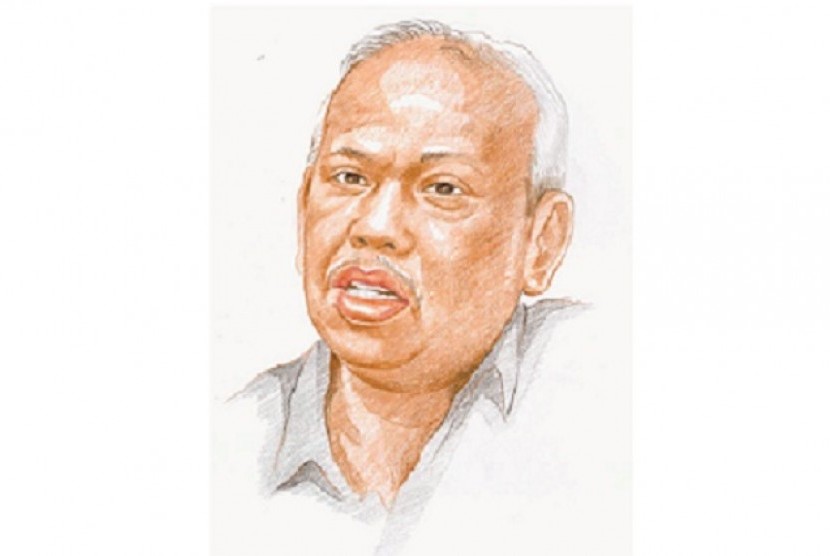
REPUBLIKA.CO.ID, By Azyumardi Azra
Indonesia Pedagogic. HAR Tilaar, 83 years old emeritus professor (born 1932) is one of the few reviewers and education practitioners who are still very active and prolific writing. Besides Theoretical Pedagogic for Indonesia (2015), which was his latest work, he has written 28 books and 21 booklets about education. Not to mention the papers and articles.
Tilaar is one of the few thinkers and movers of critical pedagogy in Indonesia together with the figure such as Mansour Faqih and Mochtar Buchori-whom were both deceased. Educational thinking and critical pedagogy of these characters typically look at education in terms of political, social, cultural, philosophical, or religious.
Education is more than just technology education or preparation of teaching and learning in the classroom. Unfortunately, many people were involved in the education world-including LPTK, universities/faculties that produced teachers whom tend to be shackled by administrative technical problems which were not time-consuming. As a result, teachers and also more recently lecturers did not have a chance to improve their mastery of the substance to pass on to students.
This situation was more severe in the last decade when the world of education in Indonesia since from kindergarten to college experienced a continual process of bureaucratization. Teachers and lecturers were busy in a variety of businesses to obtain or maintain certification. They spent days filling such form of teacher performance appraisal (PKG) or workload lecturer (BKD) with provisions and points that were often illogical.
If they were unable or wrong to fill any specific points in the accreditation forms sort of PKG or BKD, it was not often they get intimidated by superiors or ministry inspectorate. They were easily threatened as 'committed an unlawful act' or 'must restore the benefits of certification they have received '.
Therefore, Tilaar noted, education in Indonesia were too overpowered by authority structure. As a result, thought and science education and pedagogical science could not thrive-or even so-called dead. Borrowing framework of Raymond Williams, a British thinker who was very influential in the second half of the 20th century, pedagogic in Indonesia was in dominant-culture conditions under the power which were handcuff.
Autonomy, freedom, and independence were almost nothing else in the world of education in Indonesia. Educational institutions only a mere technical implementation unit (UPT) associated with the ministry of education. They became mere implement the bureaucrats policies and educational administrators, whom often released the rules and policies which were misguided, mislead, and plunged the education into the depths without basic.
In short, in Tilaar’s view, the disappearance of the freedom and independence of learners because of two main things, first, once again education was too much interference from practical politics. Various political forces wanted to see quickly the results from the education system because it was associated with budget.
Second, education was too influenced by economic outlook which saw the goals and outcomes of education for the short term. Education was seen as an investment to gain profit quickly; education was not seen as an investment for the development of cultural capital and social capital.
If the Indonesian education could achieve progress-not only knowledge transfer, but also gave births Indonesian citizens which independent to develop imagination, creativity, and dignity of themself- needs basic and fundamental change. Borrowing framework of AP Hargreaves & DL Shirley in The Global Fourth Way (2012), radical changes need to be done in four ways.
First, restrictions on teaching assignments for teachers (and also lecturers). They should learn more and more deeply, including in the learning process. By doing so, teachers and lecturers were not only increasingly knowledgeable, but also could be more effective in the learning process.
Second, the transformations of teacher’s organizations (and also lecturers) to be able to more effectively fight the award enhancement in the profession of teachers and lecturers. Associations of teachers and lecturers should also increase its role in improving economic conditions and welfare, as well as the locus of an increase in knowledge and professionalism of its members.
Third, the enhancement of technology mastery by teachers and lecturers in order to improve the effectiveness of learning. By leveraging the virtual world through e-learning, for example, the students could enrich their knowledge and simultaneously solve the various things that they faced.
Fourth, empowering the role of teachers and lecturers as the changes dynamo. They were not only professional teachers and lecturers, but also an intellectual whom showed the way to the progress of learners and society.
The fourth recommendation was not easy to be realized, especially in the midst of an ongoing education bureaucratization. However, no matter how difficult the circumstances, those who love the Indonesian education must never give up.
 Ikuti Whatsapp Channel Republika